
Linktotem

Link in bio for artists and illustrators

People follow an artist for the work and then can't find a way to buy it. This template is a quiet gallery wall: the work first and large, the prints and the originals right after, and a commission form that asks the three questions you'd otherwise ask in twenty messages.

  • Recent work
  • Prints and originals
  • Commission form
  • Exhibitions

This is the real page, with example content you replace in a few minutes.

Use this template

Build free, no card. Publish with a 14-day free trial.

What's on the page, and why

  1. 1

    Recent work

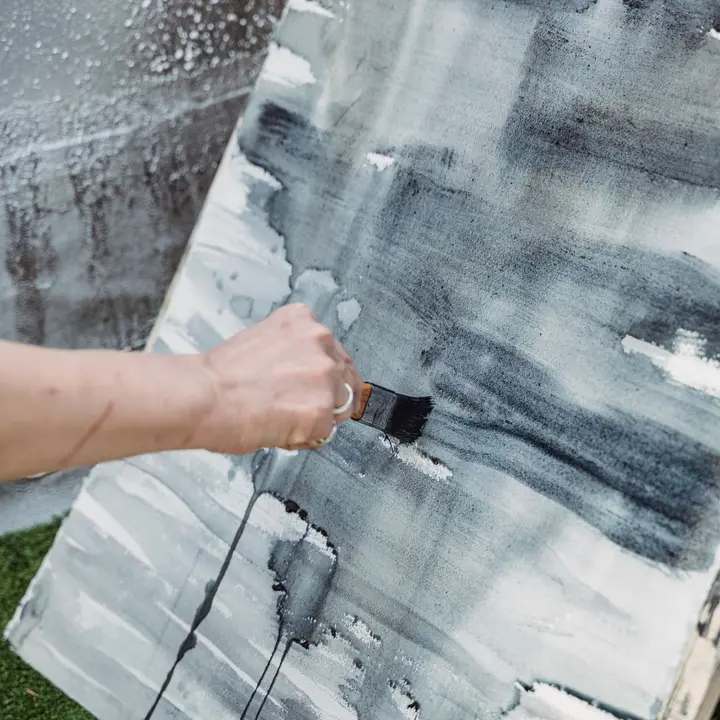
    One image at the top, large, with the medium and the year. Not a grid — a single piece, chosen. A page that opens with your best work says more about you than any description, and it is what a gallery or a client is looking for in the first three seconds.

  2. 2

    Prints

    Paper, size, run and whether it's signed, all in one line under the button. Those are the facts that decide a print purchase, and they're the ones buyers write to ask when they're missing. Point it at your shop, your Etsy or your Big Cartel — the page doesn't care which.

  3. 3

    Originals

    A plain button, kept separate from the prints. Someone buying an original is not the same person buying a €30 print, and mixing them means the original buyer has to hunt. If nothing is available, the button can lead to a waiting list.

  4. 4

    Commission form

    Name, email, what they'd like and the size. Four fields end the twenty-message conversation that usually starts with "how much for a drawing?" — and the answer to the size question is most of the price. Say in the description what happens next and how long you take to reply.

  5. 5

    Exhibitions and the studio

    A timeline of where the work can be seen — a gallery until the end of the month, a print fair in December, an open studio in January — and a link to the studio feed. Shows are what make the difference between an account that posts drawings and an artist with a practice.

  6. 6

    Questions and the letter

    A short FAQ about paper, framing, commission times and commercial use, then an email sign-up. Collectors buy from the third or fourth letter, not the first, and a print run sells out faster to a list than to a feed.

The order a gallery wall would use

The work first, because that's what they came for and it does the selling. Then the two ways to buy, prints before originals, because the cheaper one converts the stranger. The commission form next, for people who want something that doesn't exist yet. Exhibitions, questions and the letter close the page — they're for the person who has already decided they like you.

  1. Recent work
  2. Prints
  3. Originals
  4. Commissions
  5. Exhibitions and the letter

Etsy, Big Cartel, Shopify or no shop at all

The buttons open whatever you already sell through, so a shop on Etsy, Big Cartel, Gumroad, Shopify or a Ko-fi page all work the same way here. If you don't have a shop, the commission form and a WhatsApp or email button are enough to start: plenty of artists sell their first fifty pieces that way. Keep the print sizes standard so buyers can frame them locally, and say so on the page — it removes the most common reason a print sits in a basket. If you post work in progress, the studio link is worth more than a second shop button: it's the thing that makes a stranger follow, and following is what eventually sells the print.

What to write in an artist's bio

Subject and medium, in that order: "Plants, old houses and the sea. Ink and watercolour." People find artists by subject far more often than by technique, and a specific subject is what makes someone say "that's for my kitchen".

Say whether commissions are open. "Commissions open for January" saves you the question fifty times and creates a reason to write today rather than someday.

Turning followers into buyers

Show the work finished and in a room. A print photographed on a wall sells better than a scan, because the buyer can see the size. Keep one such photo as the top block whenever a new run comes out.

Announce a run to the newsletter a day before the feed. It rewards the list, it sells out faster, and it gives you something true to say publicly the next day: "half of them are gone."

What to avoid

Quoting a commission price in public comments. The same piece costs differently by size, medium and use, and a number in a comment becomes the price everyone expects. Send them to the form.

Selling commercial use as if it were a print. If the drawing is going on a label, a menu or a shopfront, that's a licence, and it should be agreed in writing with the use and the term named.

FAQ

Questions

Can I sell prints directly from the page?

You can link to your shop, and there's also a product block with a price and a buy button if you'd rather sell from the page itself.

Can I show a portfolio grid?

Yes. Links can be laid out two or three across, so a row of pieces reads like a grid while each one still goes somewhere.

How do commission requests reach me?

By email as they arrive, and they're kept in the dashboard, where you can export them as a spreadsheet.

Can I use my own domain?

Yes, on the paid plans. For an artist it's worth it: a plain address on a business card at a fair is easier to remember than a long handle.

Will my images be compressed?

Images are resized for the web so pages stay fast on a phone. For detail work, link to a larger image or your shop, where the full file lives.

Does it work for a tattoo artist or a ceramicist?

Yes. The same structure — work, shop, commission form, where to find you — fits anyone selling something they make by hand.

Free tools that go with it

More templates

See all templates

Start in minutes

Your page, from this template

Pick a username, and your page starts with this template: change the words, add your links and it's yours.

Build free, no card. Publish with a 14-day free trial.

Claim your link today

One link for everything you create, sell and share. Free to publish, online in minutes.